



❗ Case Study: Shower Enclosure Sold as “900mm” but Unable to Fit a 900mm Opening Against – heatandplumb.com
Author: Andreas RUsso
Date: 28th Jan 2026
Location: United Kingdom
1. Background
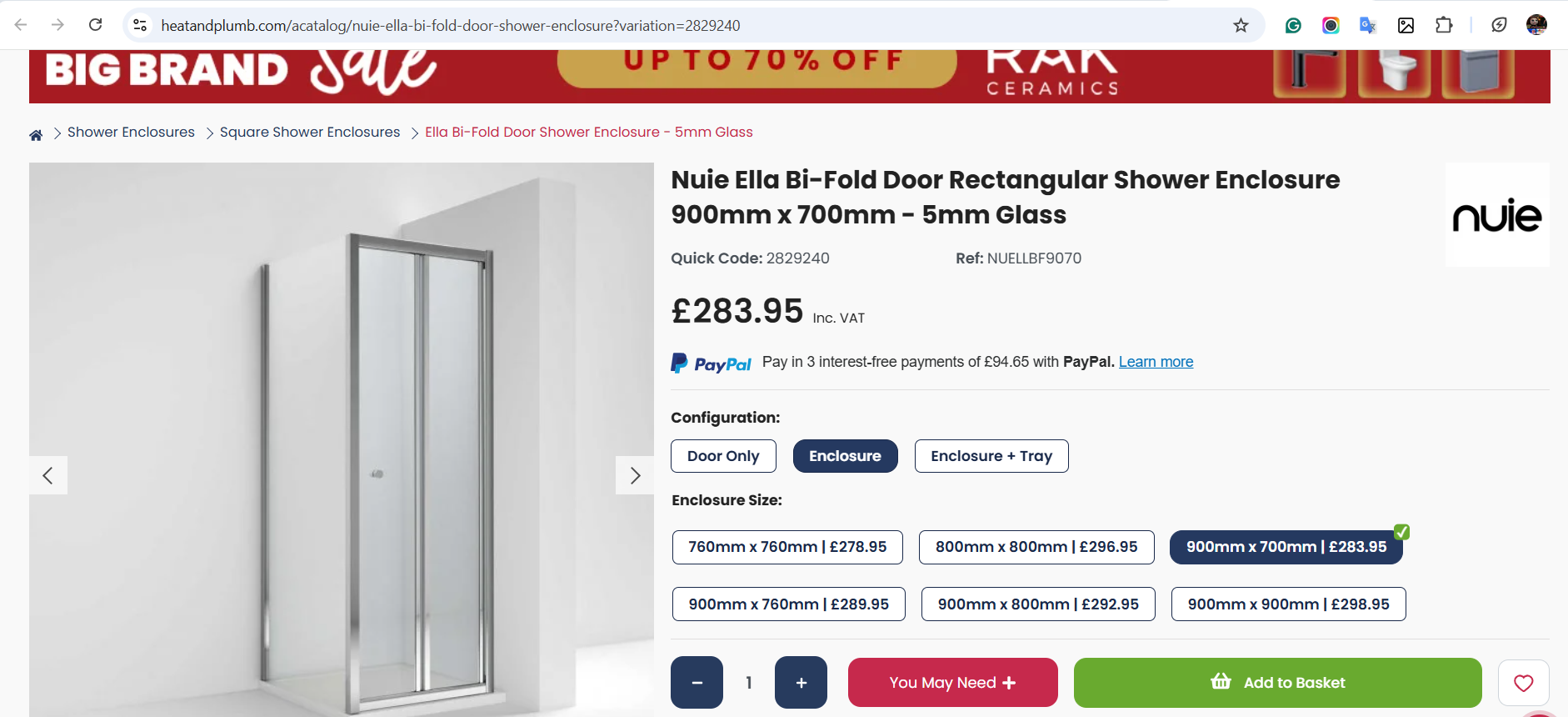
I purchased a bi-fold shower enclosure from a UK retailer, advertised and sold online as a 900mm shower enclosure.
The product listing clearly shows a selectable option labelled:
900mm x 700mm – 5mm Glass
This enclosure was purchased specifically for installation onto a standard 900mm shower tray, which is one of the most common sizes used in UK residential properties.
This article documents the measurements, correspondence, and delays encountered when the product was found to be physically incapable of fitting a 900mm opening.
2. What the Website Claims
At the point of sale, the retailer’s website presents the enclosure as a 900mm product, without any prominent warning that it may not actually reach 900mm in real-world installation.
A reasonable consumer would naturally understand “900mm” to mean:
- Suitable for a 900mm opening
- Compatible with a 900mm tray
- Capable of being installed without leaving a gap
This expectation is entirely reasonable and consistent with standard bathroom product marketing.
3. What Happens in Reality
Once delivered and installed, the enclosure was extended to its maximum possible adjustment using the supplied wall profiles.
Despite this:
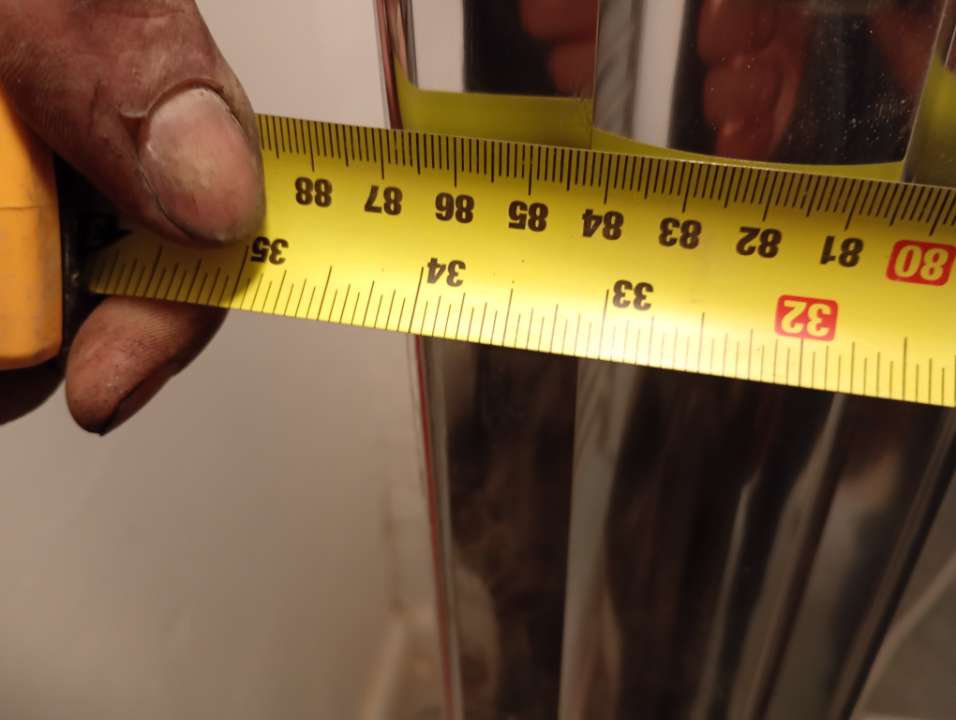
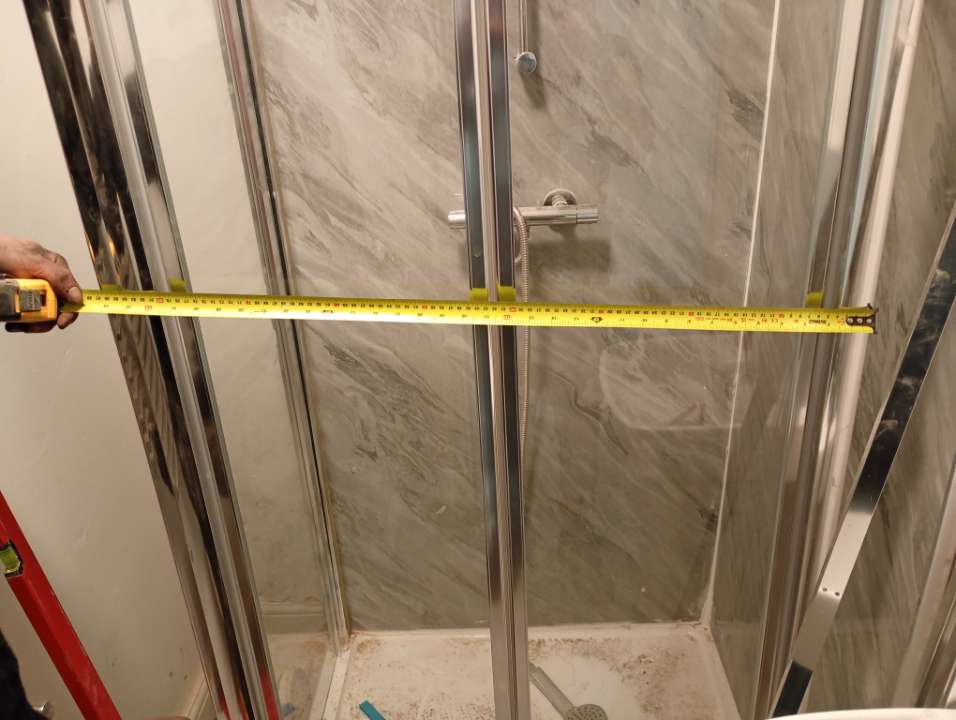
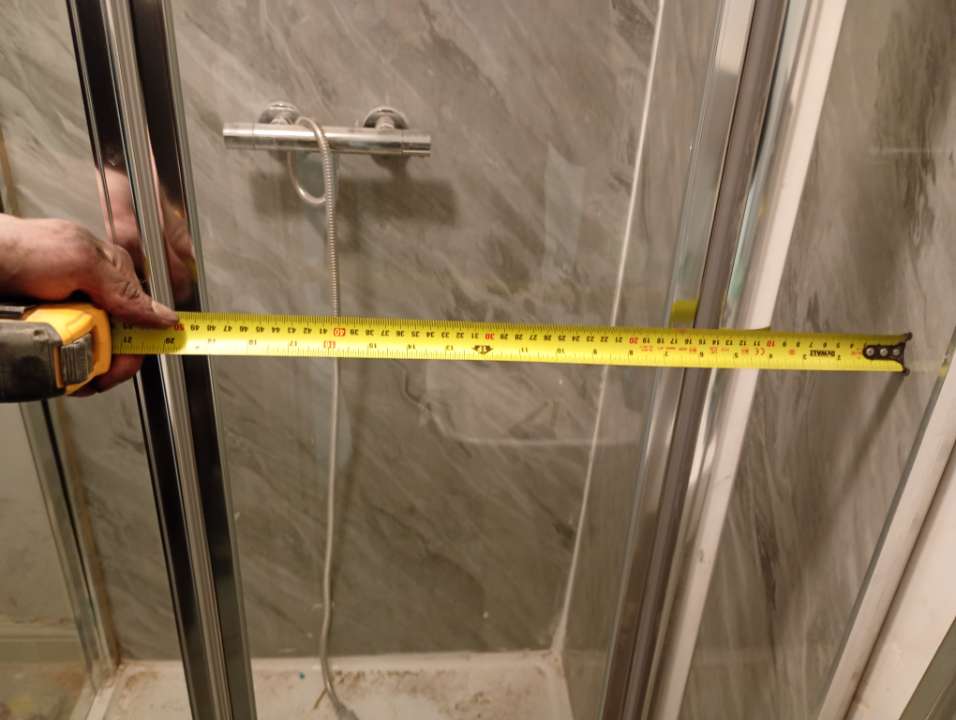
- The maximum achievable width was approximately 870–885mm
- The enclosure could not span a 900mm opening
- A visible and unacceptable gap remained
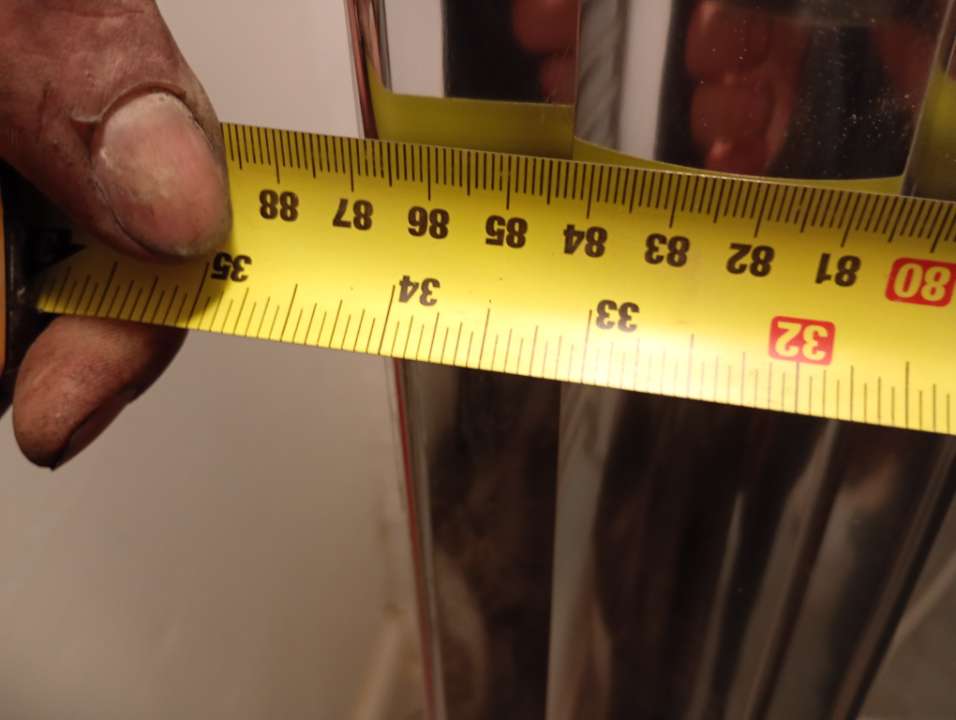
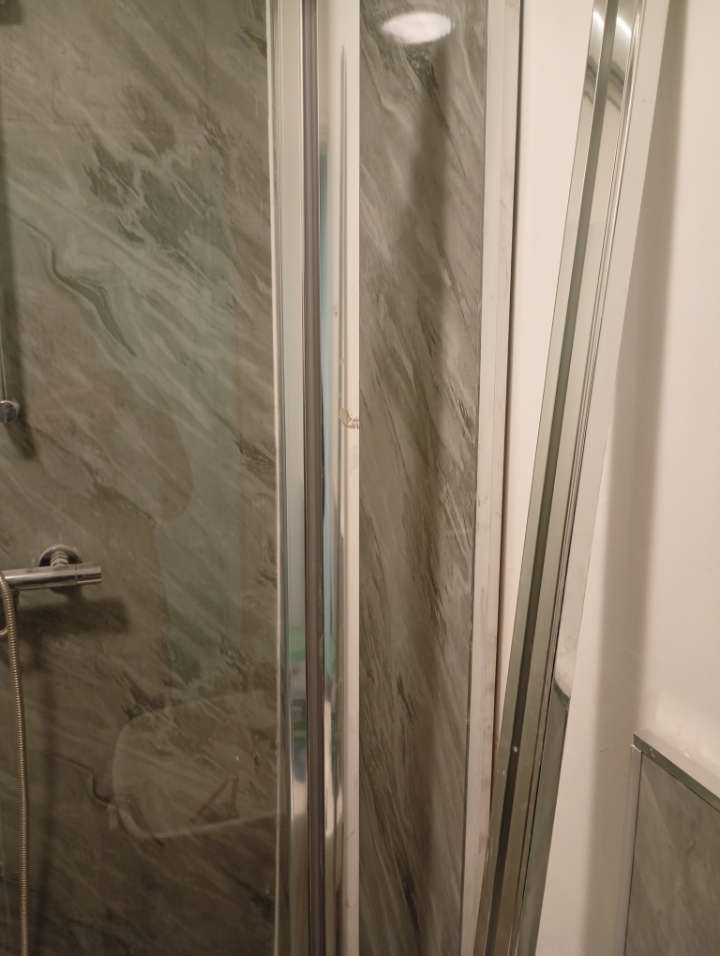
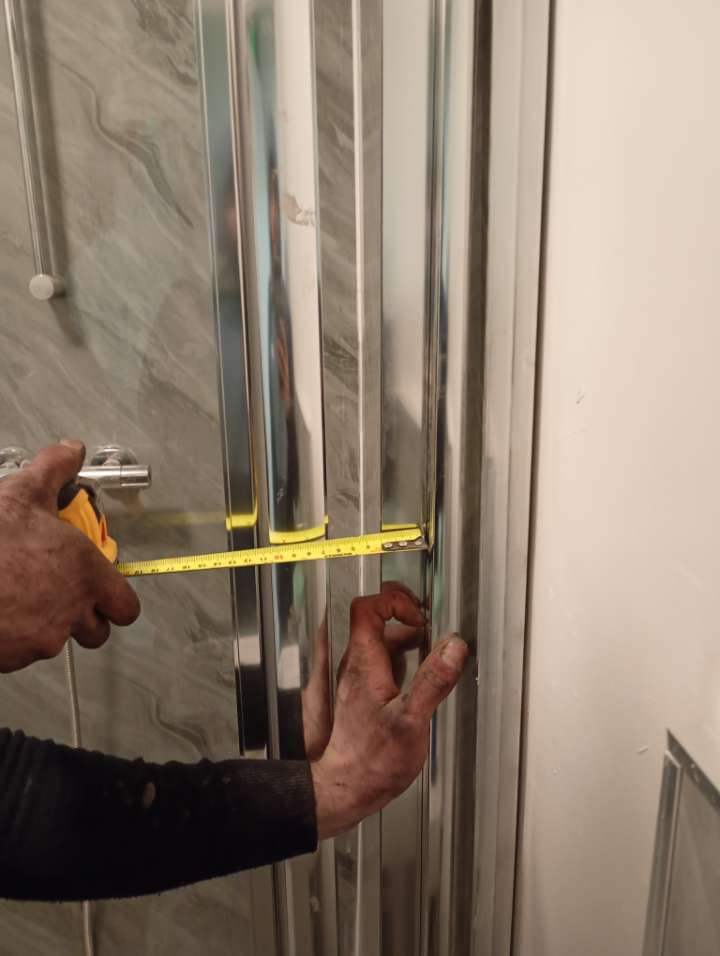
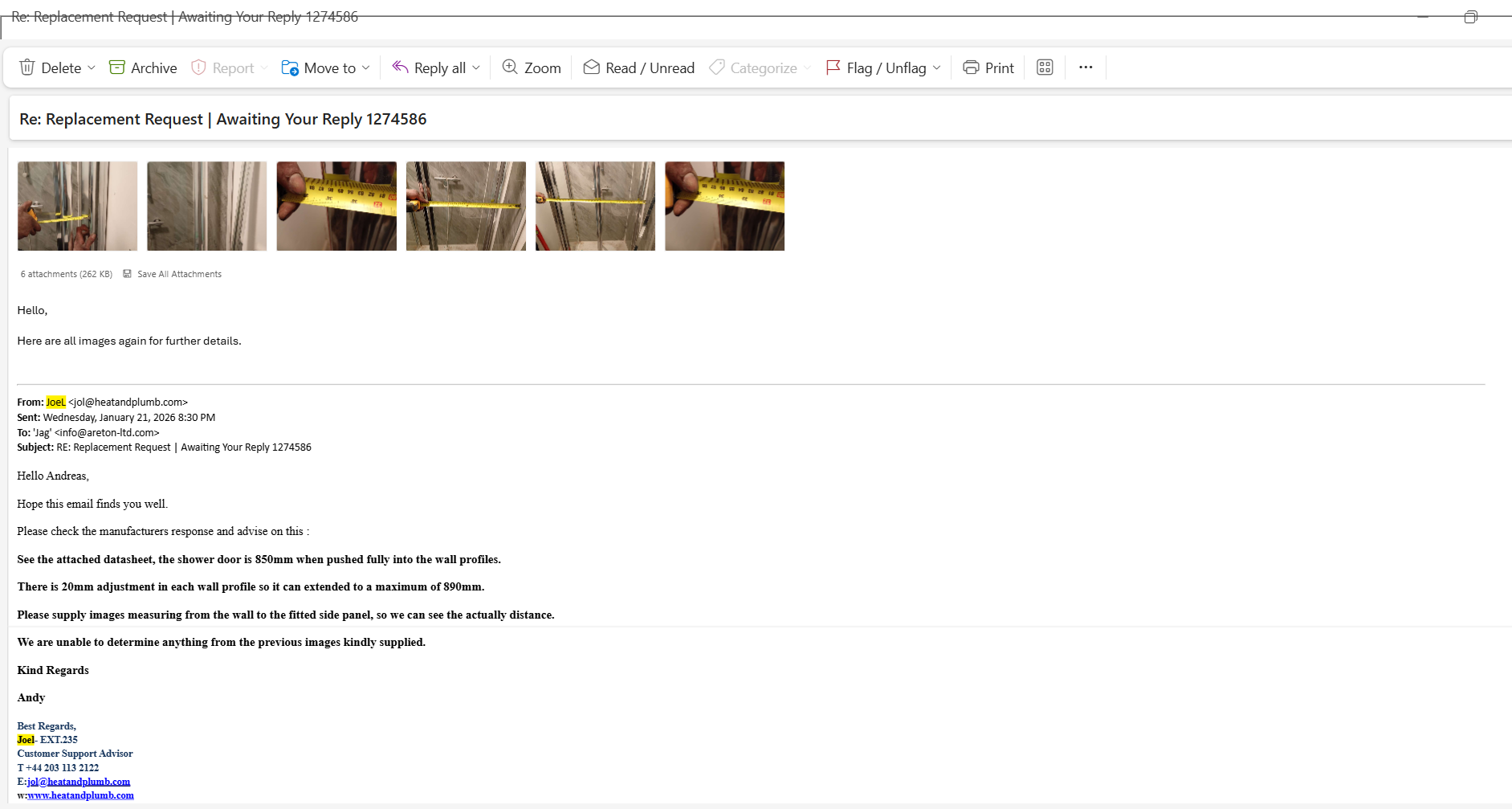
This was confirmed using multiple tape-measure photographs showing the enclosure already at full extension.
In short:
A product sold as 900mm cannot physically reach 900mm.
4. Evidence Supplied
The following evidence was provided to the retailer:
- Photographs of the enclosure fully extended
- Clear tape-measure readings showing 850-885
- Images demonstrating that the profiles were already set to their maximum adjustment
- Confirmation that no further extension was possible
This evidence directly addresses the only relevant technical question:
What is the maximum width the enclosure can achieve?
5. Inconsistent Statements and Changing Specifications
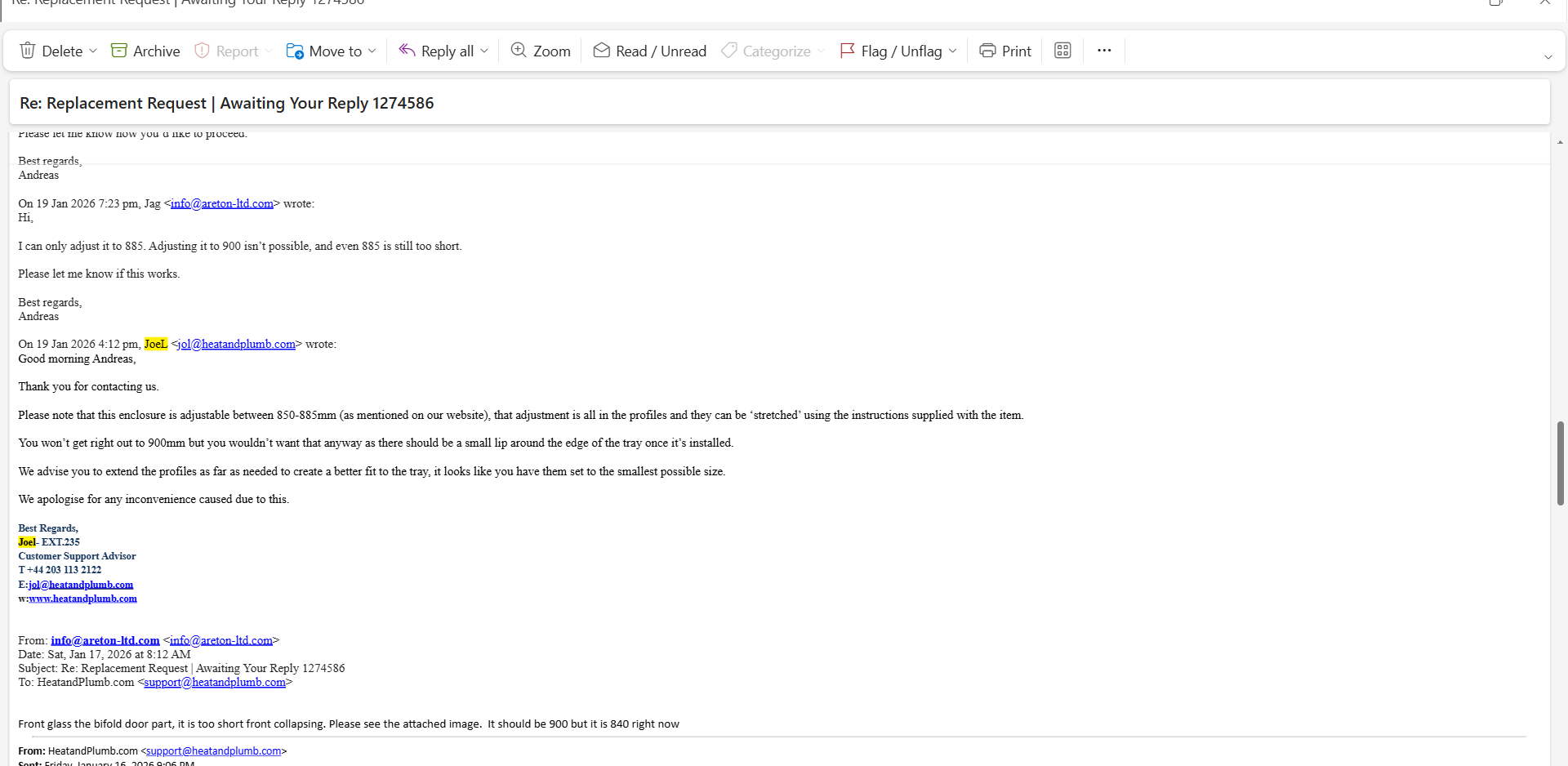
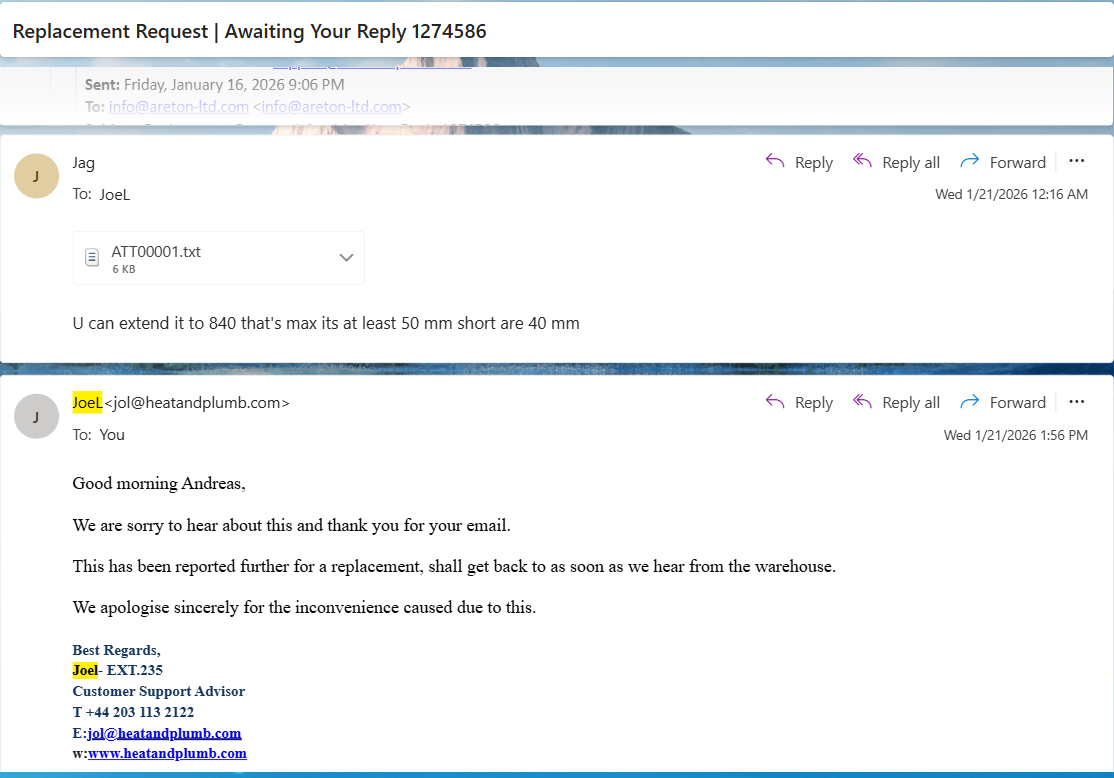
During correspondence, multiple and conflicting adjustment ranges were stated:
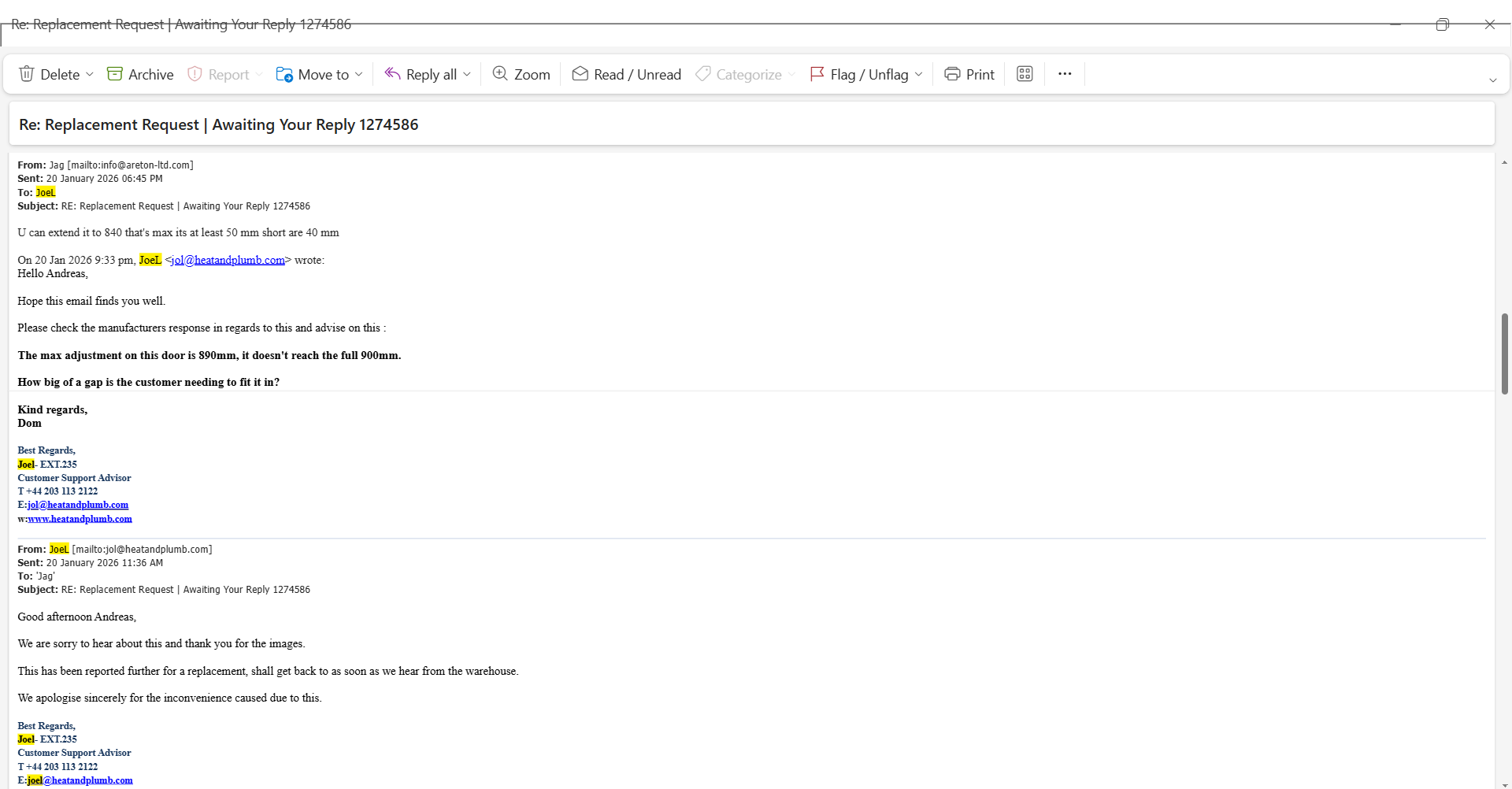
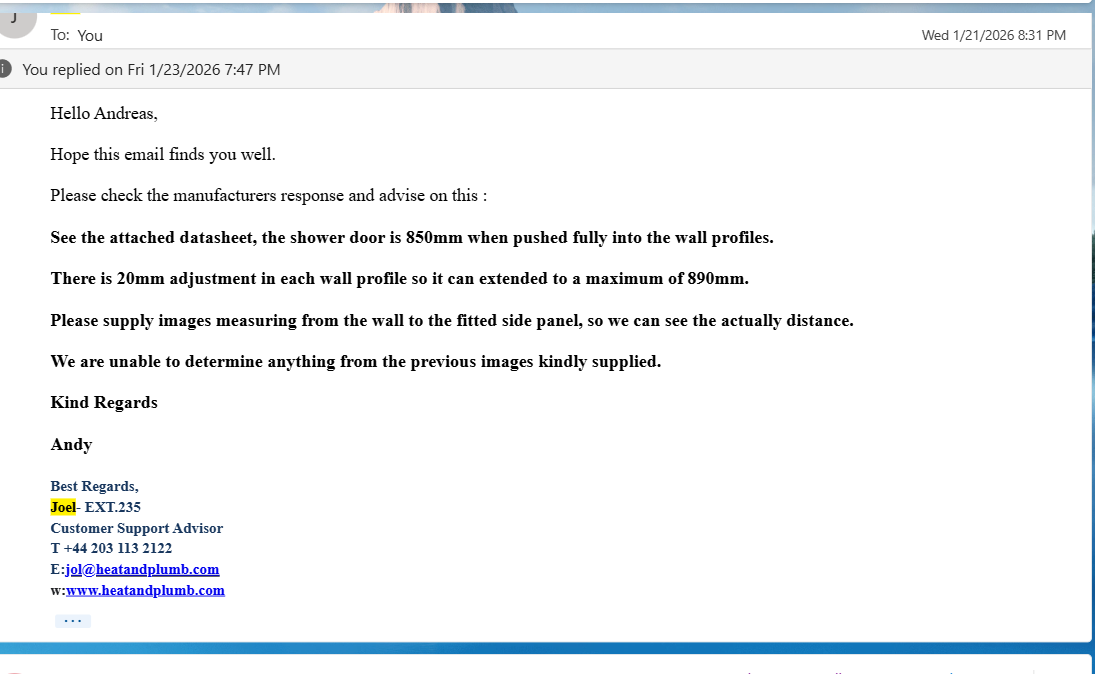
- Initially: 850–885mm
- Later: Up to 890mm
- Later still: 870mm is within tolerance
At no point does any of these figures reach 900mm, despite the product being sold as such.
These inconsistencies created confusion and prolonged the process unnecessarily.
6. Moving the Goalposts: How Resolution Was Delayed
Rather than resolving the issue once the dimensional shortfall was shown, new requirements were repeatedly introduced.
Examples include:
- Requesting additional photographs after clear measurements were already supplied
- Asking for tray measurements, despite the issue relating to the enclosure’s maximum width, not the tray
- Stating that images were “unclear” despite visible tape measurements
- Repeatedly referring the matter back to the manufacturer without reaching a conclusion
Each time evidence was provided, the basis for acceptance changed.
This pattern is commonly described as “moving the goalposts” — where compliance with one request simply results in another request, delaying a decision without addressing the core issue.
The problem is not measurement confusion anymore — it’s the seller moving the goalposts to delay a replacement.
2. Why the supplier is stalling (what’s really happening)
They are doing 3 classic delay tactics:
🔴 Tactic 1: Contradicting their own specs
- First: “850–885mm”
- Then: “Up to 890mm”
- Then: “870mm is within range”
- Now: “We can’t tell from the images”
👉 This inconsistency alone proves misrepresentation.
🔴 Tactic 2: Asking for irrelevant measurements
They are now asking you to:
- Measure the tray
- Show profile extension kits
- Remove / re-show the entire frame
This is irrelevant, because:
- The product max width is fixed
- The gap exists regardless of tray size
- The issue is the door cannot reach 900mm
They are fishing for any excuse not to replace.
🔴 Tactic 3: Saying the images are “unclear”
This is a standard evidence rejection tactic.
However:
- Your images clearly show the tape
- The numbers are visible
- The installer’s hands are holding the frame at max extension
They are not confused — they are avoiding approval from the manufacturer.
7. Why Further Measurements Do Not Change the Outcome
A framed shower enclosure has a fixed design limit.
Once extended to its maximum:
- The width cannot be increased further
- Measuring the tray again does not change the enclosure’s dimensions
- Profile extensions cannot compensate for a 15–30mm structural shortfall
Further requests for measurements or images do not resolve the issue — they only postpone a straightforward decision.
8. The Simple Solution Being Delayed
This matter can be resolved easily.
The options are clear:
- Supply a correctly sized replacement enclosure that genuinely fits a 900mm opening
or - Issue a full refund, including return costs
No further technical investigation is required to reach this conclusion.
9. Consumer Rights Position (UK)
Under the Consumer Rights Act 2015, goods must be:
- As described
- Fit for purpose
- Of satisfactory quality
A shower enclosure marketed and sold as 900mm, but unable to reach 900mm in practice, fails these requirements.
10. Conclusion
This case highlights a common issue in bathroom product retail:
- Nominal sizes being advertised without matching real-world capability
- Inconsistent specifications
- Delays caused by repeated, shifting requests for evidence
The issue here is not installation, misunderstanding, or lack of information.
It is a simple dimensional mismatch between what was sold and what was supplied.
A prompt replacement or refund would resolve the matter immediately.
 English (UK)